COMPANY
  PRODUCT
  APPLICATION
  EVENT & NEWS
 CONTACT
 MORE
MORE  SEARCH
  EVENT & NEWS





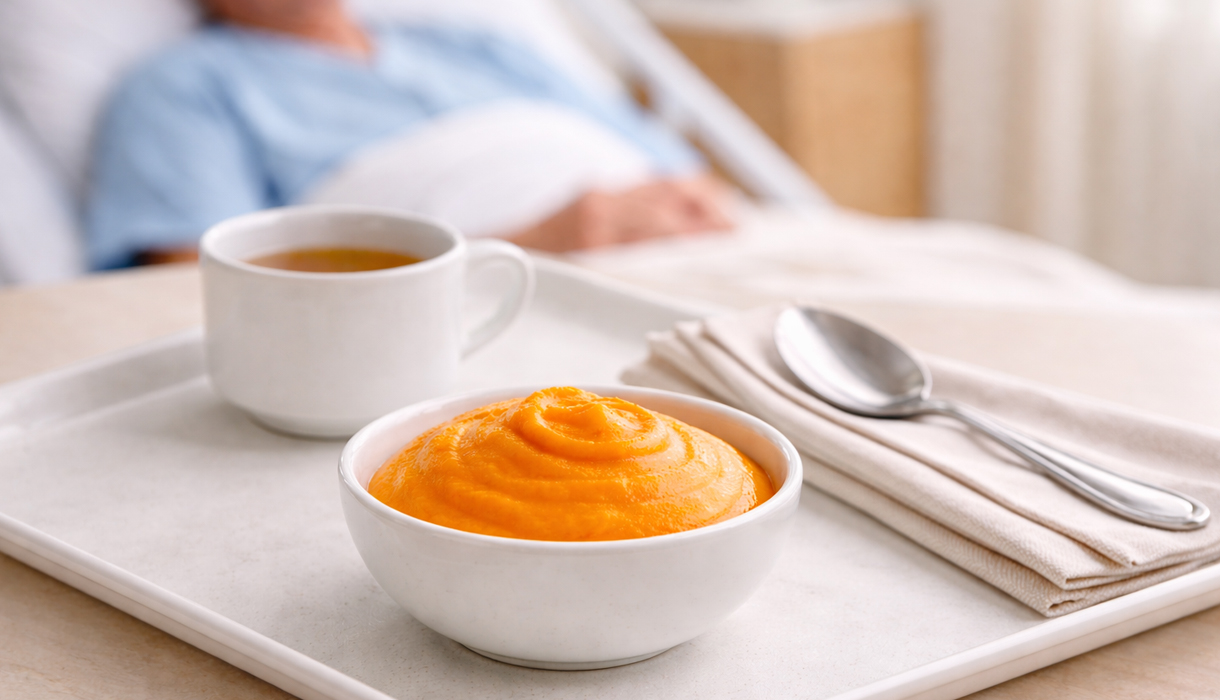
As societies age and more people require special-care diets, dysphagia has become an increasingly important concern in both clinical and home-care nutrition. Dysphagia is a condition that makes it difficult to swallow food or liquids safely, and it can lead to choking, aspiration, malnutrition, and dehydration. Because of these risks, developing foods that are safer and easier to swallow is becoming increasingly important, both in clinical care and in everyday nutrition.
One of the main ways to manage dysphagia is by changing the texture of food and drinks, making them thicker, smoother, or softer helps reduce the risk of swallowing problems. To guide this, the International Dysphagia Diet Standardisation Initiative (IDDSI) provides a global framework that classifies foods and beverages by texture and thickness levels, as picture below.

Texturizing ingredients such as hydrocolloids, gums, starches, and polysaccharides are commonly used to adjust viscosity, gel strength, and mouthfeel so products meet the required IDDSI levels.
Seaweed-based ingredients such as phytaFIBER (Gracilariopsis longissima seaweed powder) and agarEASY (fast-soluble agar powder) offer effective texture solutions for dysphagia diets. phytaFIBER provides a clean-label, natural way to increase viscosity and improve cohesiveness, while agarEASY is mainly used for its reliable gel-forming and structuring function. Both help create more stable, cohesive textures that make food safer and easier to swallow.
In formulation, the amount used depends on the product and the target texture. As a general guide, low levels (around 0.2–0.5%) are suitable for lightly thickened drinks or soft gels, while higher levels (around 1% or more) are used for spoonable purees or firmer gels. These are only starting points, and the final dosage should be adjusted through testing to meet processing needs, IDDSI targets, and sensory expectations.
Both agarEASY and phytaFIBER can be used alone or combined with other hydrocolloids to fine-tune texture. They can be applied in products for hospital use as well as retail products for home care, giving manufacturers flexible and scalable formulation solutions for the dysphagia market.